Sep 20, 2016
A Film That Surpassed Shin Godzilla and Your Name: My Thoughts on 'Rage'
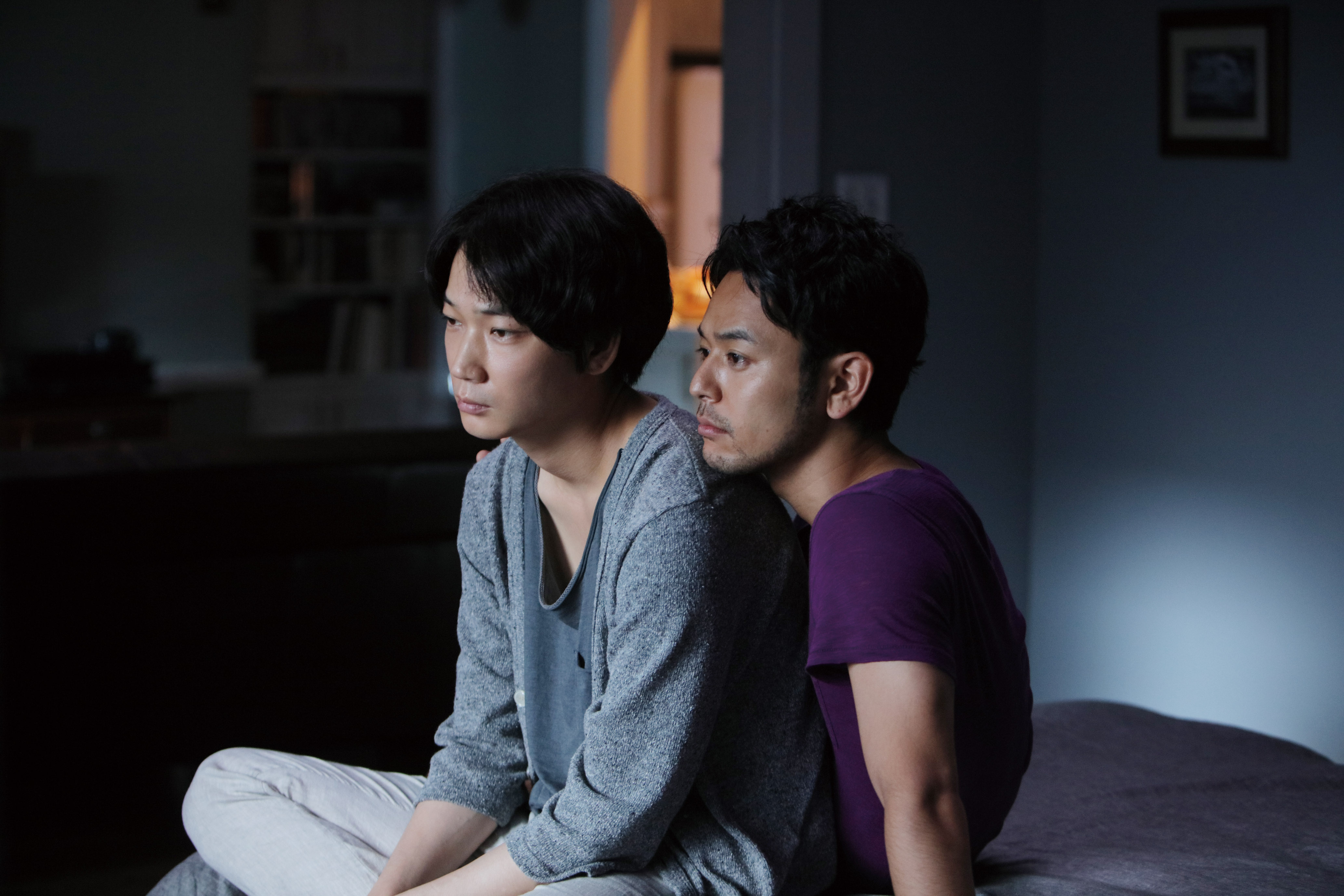
9 AM on Respect for the Aged Day. I went to see “Rage” — a film that had caught my eye from the trailer.
In a word, it’s overwhelming. If I had to add one more word: heavy.
Profoundly heavy.
Heavy in every sense. The kind of heaviness that makes the film hard to talk about lightly.
え、ちょっと待って、怒りが、個人的にはシン・ゴジラ、君の名は。を超えたんだけど…え…。
— toshi kamei (@tolehico) 2016年9月19日
“Shin Godzilla,” “Your Name.”… I’d been on a streak of seeing one masterpiece after another this summer.
It made me think: it’s been a long time since Japanese cinema had a year this good.
And the momentum doesn’t stop.
Both of those films represent categories Japan is famous for — tokusatsu and anime — and they were genuinely fantastic.
But, even so, both stories take place in worlds that aren’t real.
“Rage,” on the other hand, is hyper-real.
In that hyper-real world, every complicated emotion lurking behind the word “rage” rained down on me for two and a half hours, with real pain.
The emotional aftertaste was so complex that my brain just shut down the moment it ended.
The genres, themes, and direction are all different, so of course there’s no point comparing whether one is “better.”
But the lingering aftertaste was the inverse vector of “Your Name,” and equivalent in magnitude. And in terms of visual power, the absolutely uncompromising performances of flesh-and-blood actors rivaled the intensity of “Shin Godzilla.”
Brilliant Story Structure, Visual Power, and Exquisite Music
The way director Sang-il Lee weaves and stages three intersecting stories is brilliant.
And the unflinching, soul-stirring performances of some of Japan’s best actors are simply staggering.
Ryuichi Sakamoto’s genius score adds even more weight to the film. Every element is brought together by perfect casting — and expressed in the best possible form.
This delicate, weighty kind of film is something only Japanese cinema can do, I think.
李監督は、血肉の通ったキャラクターを求める監督で、本物で、むき出しの感情が見えるまで決してOKは出さないらしいが、僕らには見えない役者の殻を撮影を通して何枚も何枚も破ることのできる監督なんだろうな。
こんなに優秀な俳優陣がそれぞれ撮影中に何枚も殻を破ったら、そりゃ良い作品になるわ。
— toshi kamei (@tolehico) 2016年9月19日
Rage, and What It Means to Trust Someone
The film is called “Rage,” but the theme isn’t simple, explosive anger — it’s a kind of pent-up, can’t-be-blamed-on-anyone rage that has nowhere to go.
Rage is universal, but the more complex the emotions involved, the harder it is to share with others.
It becomes a feeling that only oozes out from inside the one who carries it.
If you trust someone, you can be betrayed. If you don’t trust them, then you’re the one betraying them.
Trust and betrayal are razor-thin apart — and we end up deciding selfishly based on how we feel in the moment.
In fact, “to trust” isn’t a state — it requires intention.
While watching the film, I went back and forth too: “this person isn’t the culprit, no, maybe they are.” I kept trusting and being betrayed, on a loop.
That’s exactly why, as the climax approached, I caught myself wanting to look away — afraid to know the truth.
People trust people easily — and people betray people easily.
Trusting and betraying are both that heavy, and that difficult.
I think the essence of this work is depicting just how heavy and difficult it is to trust another person.
Suzu Hirose’s Challenge and Lament
この顔は広瀬すずの顔じゃなくて小宮山泉の顔や pic.twitter.com/yt6p9KngD6
— 広瀬すず ℋ (@hirosesuzu06190) 2016年9月18日
And after Chihayafuru, Suzu Hirose got me again.
This is a major film with a parade of lead-caliber actors — Ken Watanabe, Satoshi Tsumabuki, Kenichi Matsuyama, Aoi Miyazaki, Mirai Moriyama, Go Ayano, and more.
The actors’ gestures, gazes, and speech are all honed down to the last detail. To enjoy the story, you can’t take your eyes off any small motion.
So going in, I was a little worried — could Suzu Hirose really hold up among that many veterans? But she didn’t fall behind a step, and she nailed the role of Izumi Komiyama beautifully.
I was honestly moved — and a little terrified at how good she’s going to be.
It also leaves your heart aching and frustrated… you’ll get what I mean if you see it. It’s painful in many ways. That kind of performance is just unfair.
映画見てからこの文章見ると…あれ?おじさんの目から涙が…
— toshi kamei (@tolehico) 2016年9月19日
広瀬すず 「怒り」
⇒ https://t.co/1Rmj4pcTsx
↑ Her own words give you a lot to think about — and reading them after seeing the film, the double layer of Izumi’s anguish and Hirose’s own makes the heart ache twice as much. Just heartbreaking.
I Want to See It Again — But Also Never Again
I ended up seeing Shin Godzilla and Your Name. twice each, and “Rage” is also a movie I want to revisit knowing the ending.
But I’d also rather never see it again.
It’s that kind of film.
You’ll understand when you see it.
That’s how shocking it is.
I caught the first showing on a holiday morning, and this intense film really did a number on me.
The aftertaste lingers.
Watching alone, you can’t release that aftertaste — and it makes it even harder.
And night feels too heavy to take it on, so I’d recommend a daytime showing.
Or, if you can swing it, watch it late at night and walk home with the sunrise.
After it ends, you’ll want to cling to the sun.
I haven’t read the original novel.
It was probably better not knowing the ending in advance.
There are a number of sensational moments, so go see it tomorrow before any spoilers hit.
Word-of-mouth is going to spread, and I bet theaters will be packed this weekend.
I’m so glad I got to encounter such an incredible film — and feel it on my skin in the theater.
Seriously, what an extraordinary thing to witness. A must-see.
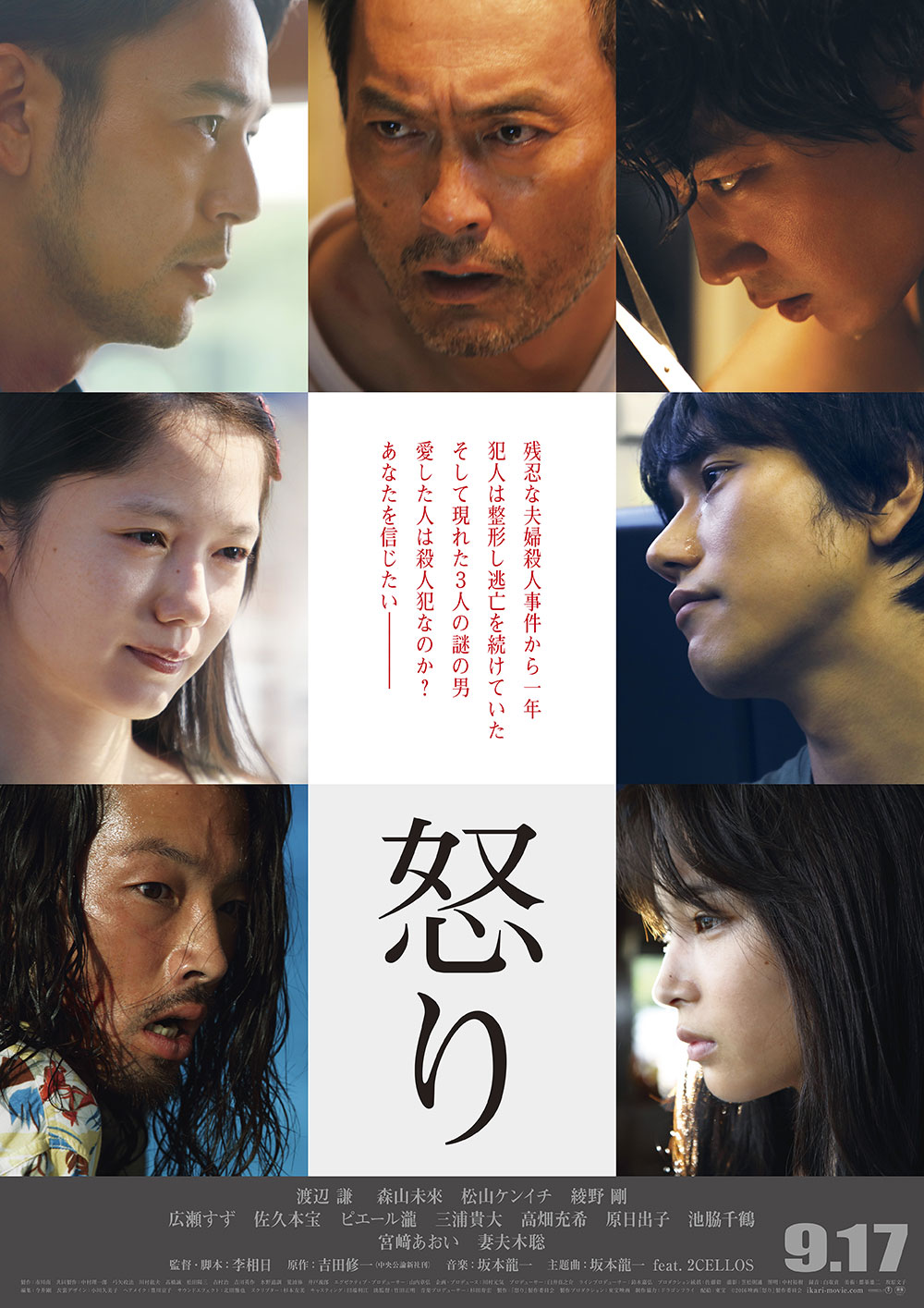
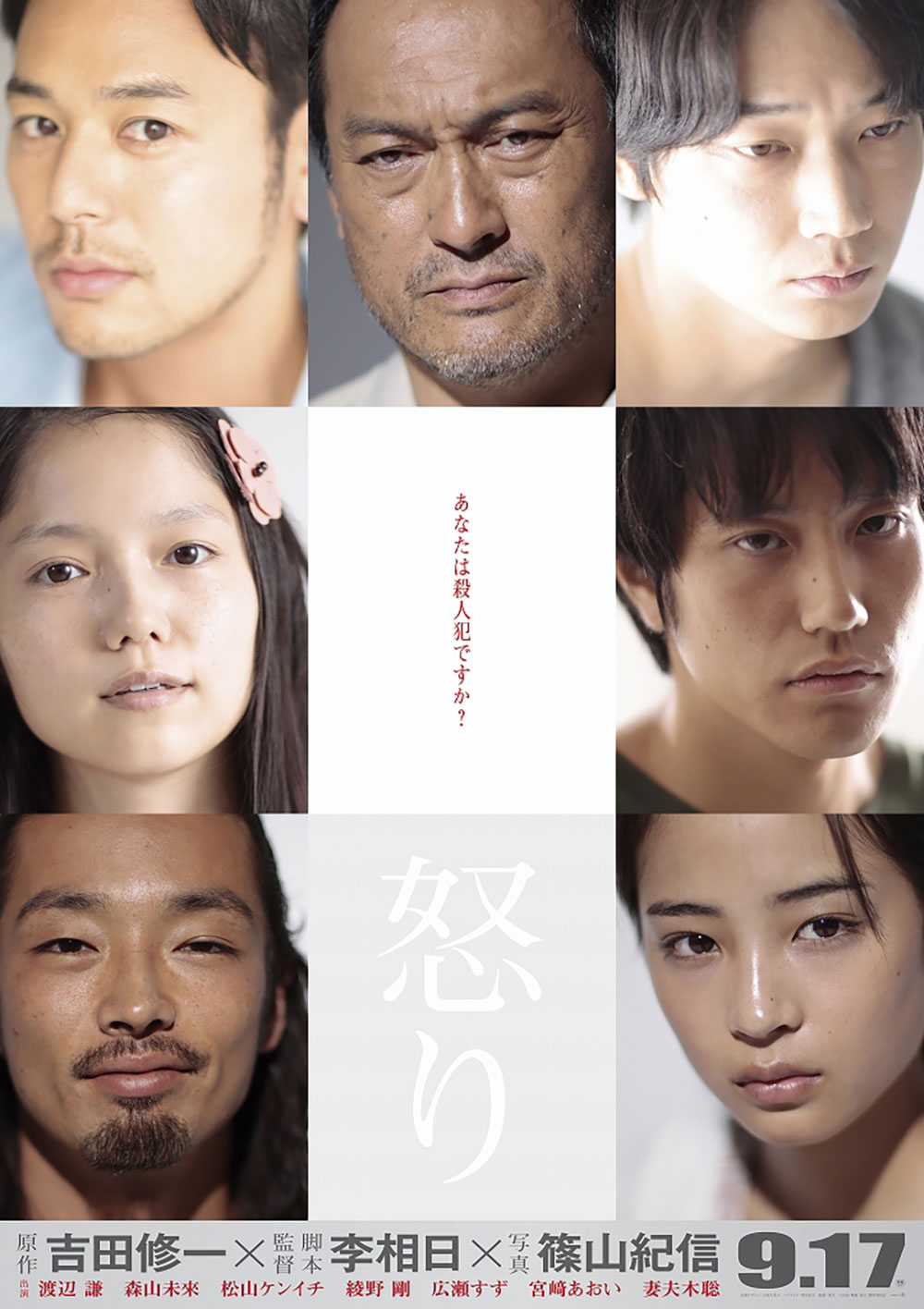
↑ Poster photography by Kishin Shinoyama.
References
Aoi Miyazaki apparently gained 7 kg to prepare for her role; Satoshi Tsumabuki and Go Ayano actually lived together; and Mirai Moriyama lived alone on an uninhabited island.
「怒り」は妻夫木聡と綾野剛の同棲生活ばかりが取りざたされるけど、森山未來も役作りのために無人島生活をしていたそうだし、渡辺謙も漁協に取材に行ったし、宮崎あおいも千葉のホテルに缶詰になったそうだ(これは撮影の都合だろうけど)。
— ヒノッチ (@hinocchi) 2016年9月17日
宮崎あおいちゃんが役作りで7キロ太るために、とにかくゴロゴロして寝る前にアイスやらご飯食べまくりました!って言ってたけどそれ私の普段の生活ゥ…………
— カワコニ🌛🌛 (@______arsans) 2016年9月15日
Suzu Hirose was amazing, sure — but Aoi Miyazaki’s performance was also staggering. I never knew she could act like that…
「怒り」、監督が凄いのか俳優が凄いのか。役者が何故芝居でメシを食えているかをまざまざと思い知る。出演俳優達の総合芝居クオリティは今年イチの邦画では。中でもその秘めたる実力を遂に表した宮崎あおいの、研いでいたナイフ(比喩)を垣間見た瞬間の戦慄と鳥肌に合わせ技一本です。#映画怒り
— Nickelodeon (@1976Nickelodeon) 2016年9月17日
Tatsuya, Izumi’s classmate, is played by Takara Sakumoto, a newcomer who beat out 1,200 others at audition.
His performance also had real soul.