Dec 25, 2015
The 5 Overseas VCs Who Came to Myojo Waraku, and Why
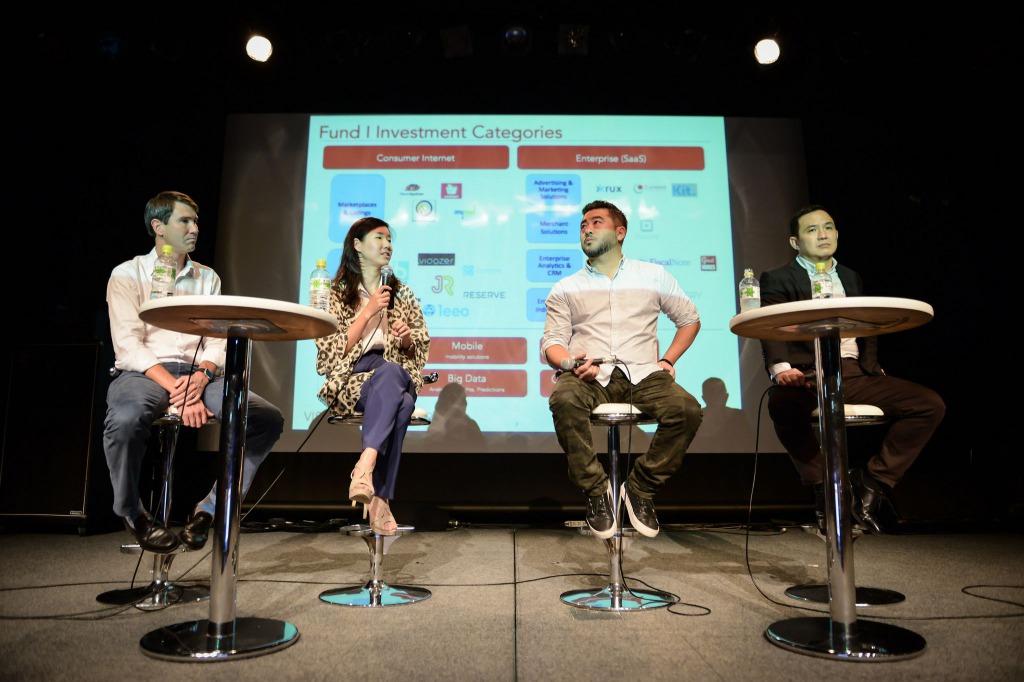
On November 14, 2015, Myojo Waraku 2015 took place, centered around Tenjin in Fukuoka City.
For those unfamiliar with Myojo Waraku, here’s a quick rundown:
It’s a festival of technology and creativity that started in Fukuoka in 2011.
Last year it was also held in Taiwan, and this year it returned to Fukuoka’s Tenjin area on an even bigger scale.
Like SXSW, the festival takes over the whole city — and it has been growing year by year.
All sorts of people bring their own tech and creative projects to the event, and it all unfolds simultaneously, chaotically, and in parallel.
Startup Pitches and VC Talk
This time, on behalf of Mistletoe, I produced the following two pieces of content at IMS Hall, one of Myojo Waraku’s main venues:
- Pitches by handpicked startups going global
- Panel discussion with overseas VCs
THE BRIDGE and VentureBeat wrote about the event.
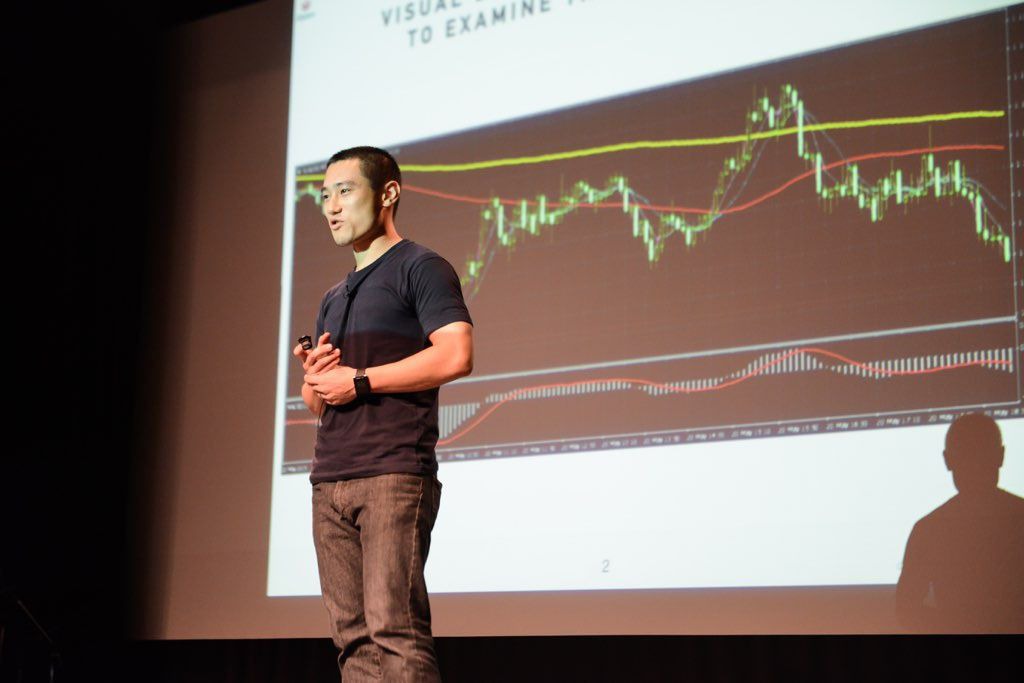
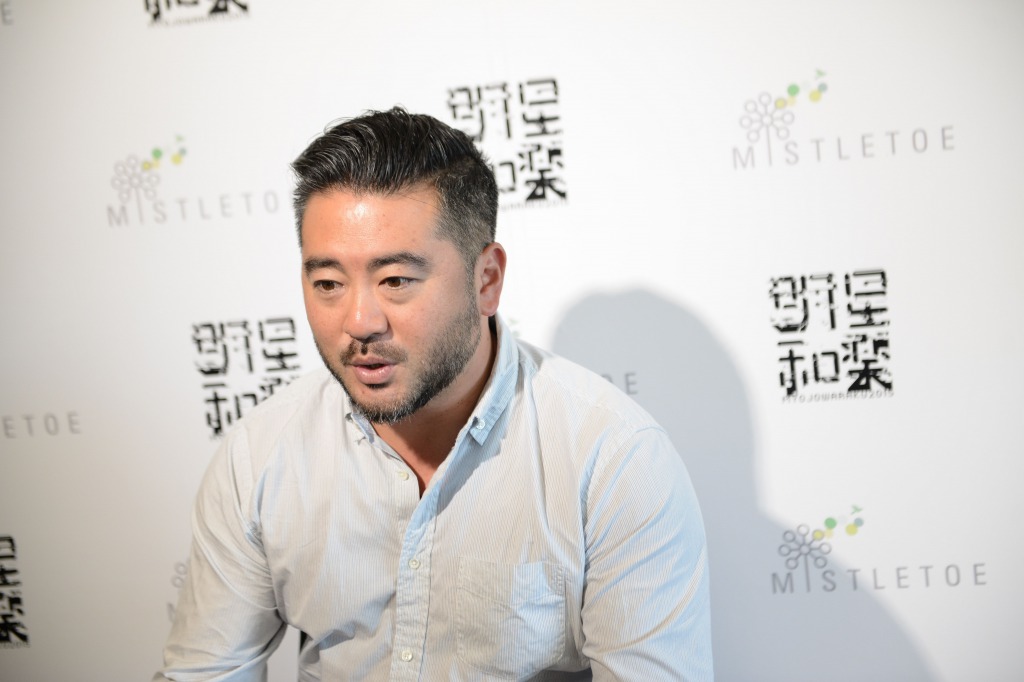 Photo by Daichi Chohara
The following 6 startups and 5 overseas VCs joined the program.
[Participating Startups]
-
Alpaca, Inc. ▶ The world’s first trading platform powered by deep learning.
-
Nulab Inc. ▶ A Fukuoka-born venture building global products.
-
SORACOM, INC. ▶ A mobile data communications platform for IoT.
-
SYMAX, Inc. ▶ A healthcare hardware startup developing in stealth mode.
-
H2L Inc. ▶ A University of Tokyo-born tech venture making UnlimitedHand, a haptic game controller.
-
Skydisc, inc. ▶ A Fukuoka-based sensing startup.
[Participating VCs]
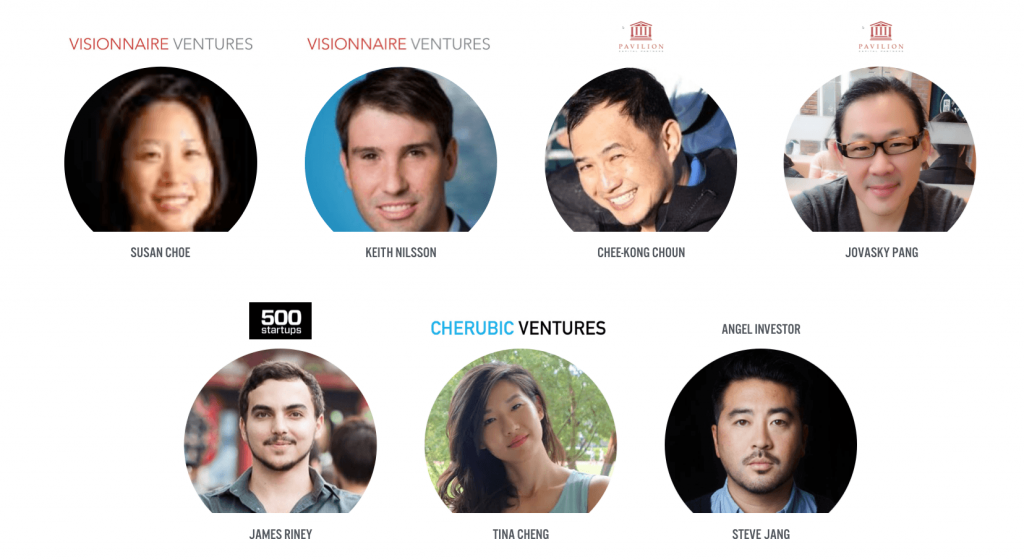
-
Visionnaire Ventures ▶ (Susan Choe & Keith Nilsson) A Silicon Valley-based $80M VC fund with investments in RedMart and Reserve.
-
Pavilion Capital ▶ (Chee-Kong Choun & Jovasky PANG) A subsidiary fund of Singapore’s government-affiliated Temasek investment bank, with a $6M investment in freee.
-
500 Startups ▶ (James Riney) A globally renowned seed accelerator that recently launched a Japan branch fund.
-
Cherubic Ventures ▶ (Tina Cheng) An SF-based VC focused on Asia, looking to ramp up its investments in Japan.
-
Steve Jang ▶ (Angel Investor) Former founder of SoundTracking, and angel investor in Blue Bottle Coffee, Uber, and Coinbase.
We Wanted to Create a Launch Pad for Japanese Startups Going Global
The reason we ended up running content at Myojo Waraku is that Hashimoto-san — a Myojo Waraku organizer and the CEO of Fukuoka-born venture Nulab — brought the idea to Taizo Son of Mistletoe.
Hashimoto-san’s Nulab makes products like Cacoo that already have a high share of overseas users, and they wanted to accelerate further global expansion.
So we decided to create a place to actively match Japanese startups with the ambition and potential to go global with overseas VCs and media — and to give Japanese startups a push toward going global. That’s how this project started.
Building a Springboard for Going Global in Fukuoka
In addition to the pitches and panel discussion, we ran the following closed sessions as Myojo Waraku’s behind-the-scenes content:
- Mixer between Japanese startup folks and overseas VCs
- Closed meetings between globally-bound startups and overseas VCs
- A traditional tea ceremony to welcome the overseas VCs
Behind-the-Scenes #1:
Mixer between Japanese startup folks and overseas VCs
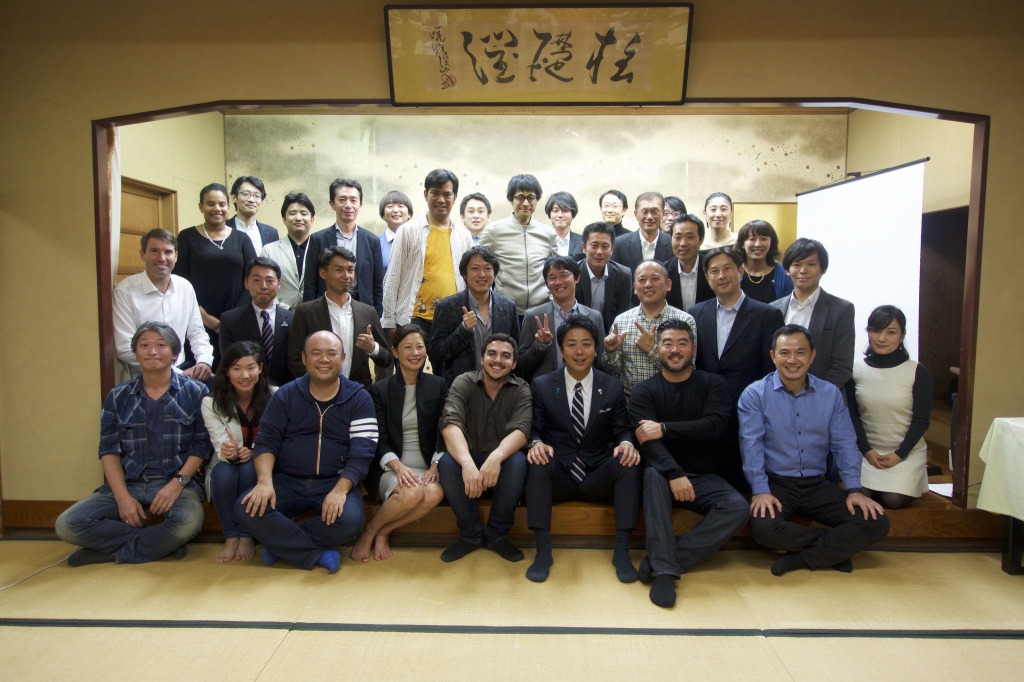 Photo by tolehico
For Japanese startups to succeed globally, it’s essential that overseas VCs understand the real state of the Japanese startup ecosystem.
So the day before Myojo Waraku, we invited Japanese startup community members to a mixer with the overseas VCs. (Venue: Sankoen)
Hotels in Fukuoka were almost completely booked on the Saturday, so we couldn’t bring people in from Tokyo — but Mayor Takashima and local Fukuoka VCs joined, and the discussion was lively.
Behind-the-Scenes #2:
Closed meetings between globally-bound startups and overseas VCs
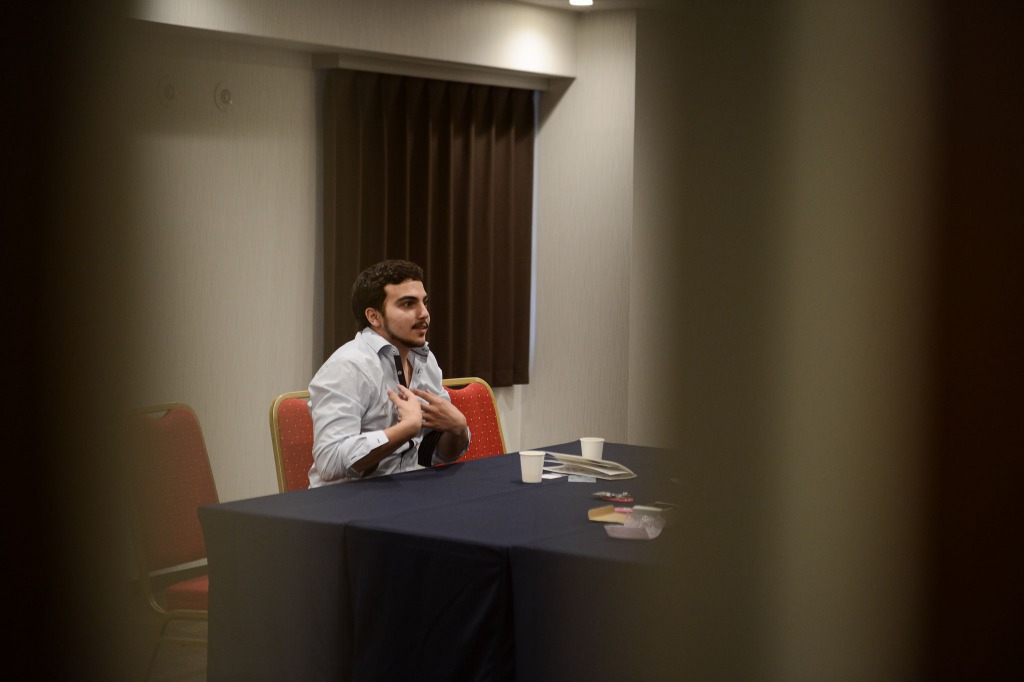 Photo by Daichi Chohara
The closed meetings were what we designed as the highest-value content of the program — for both the startups and the VCs.
Each of the 6 startups got 25 minutes in a closed setting with each of the 5 VCs — for fundraising, partnership intros, anything that could become a trigger for going global.
The overseas VCs were thrilled to get a chance to talk real business with such a curated set of Japanese startups.
There was a lot of sharp advice flying around too, and it turned into a really meaningful time for the startups — the kind of conversation that leads to next steps.
Behind-the-Scenes #3:
A tea ceremony to welcome the overseas VCs
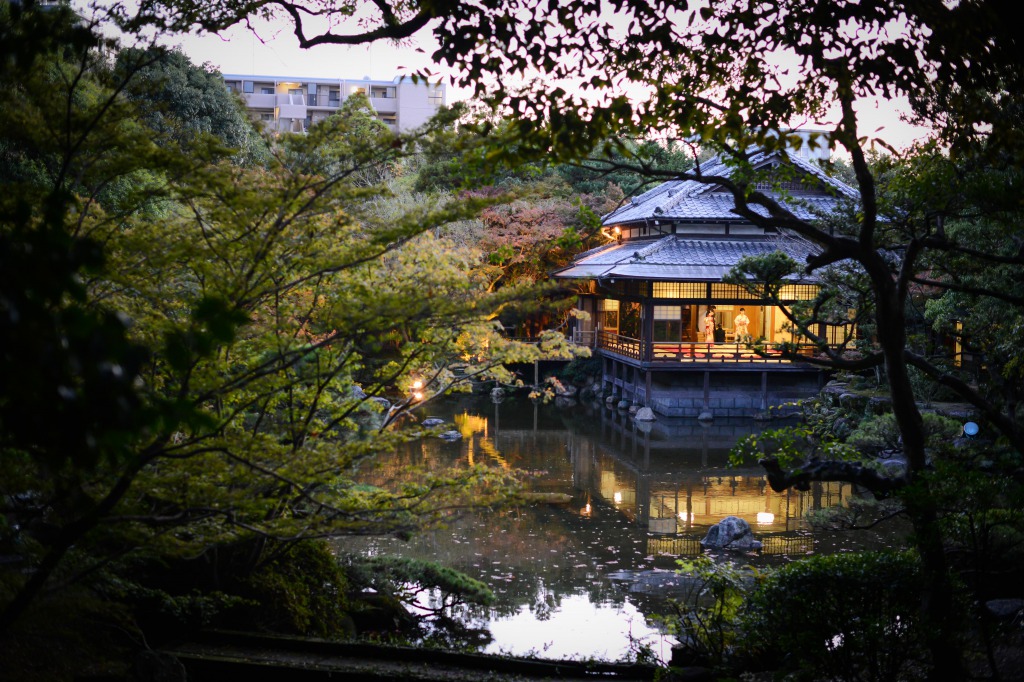
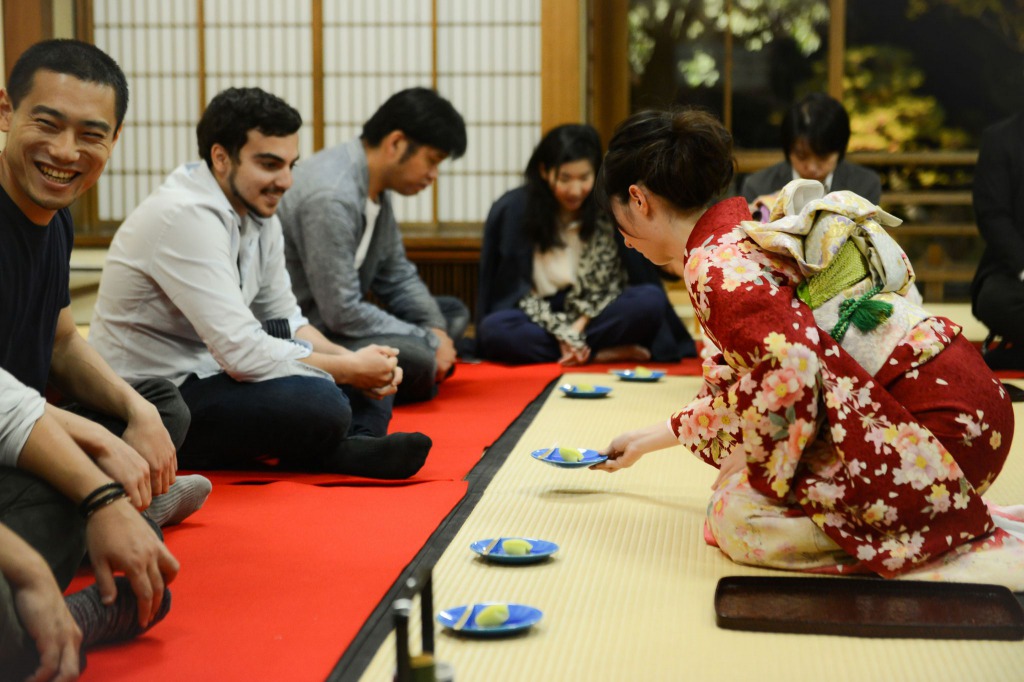
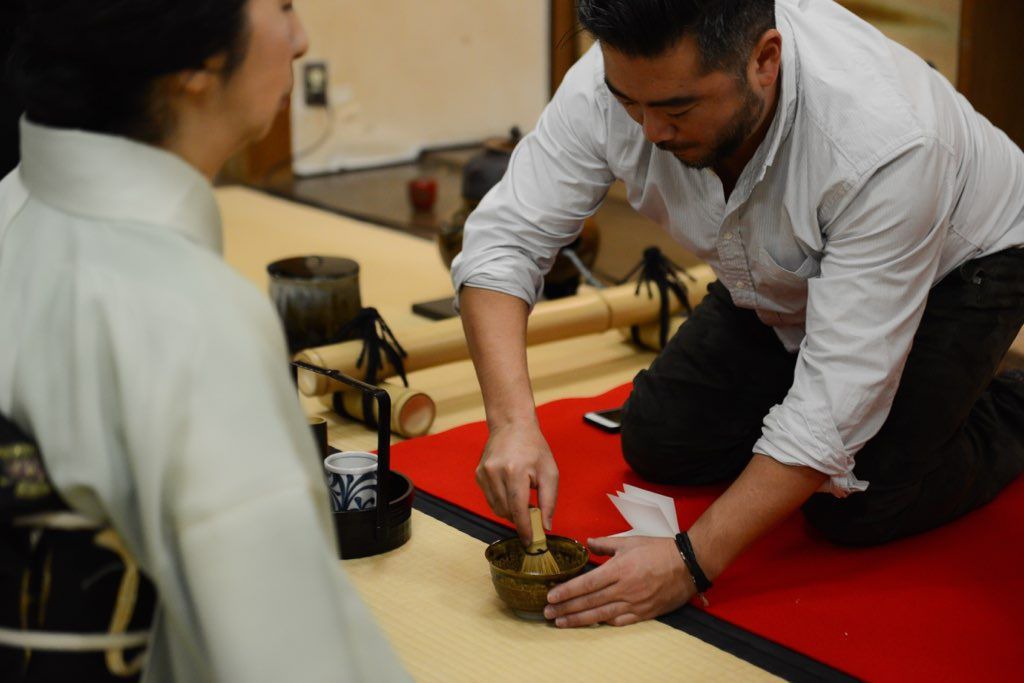
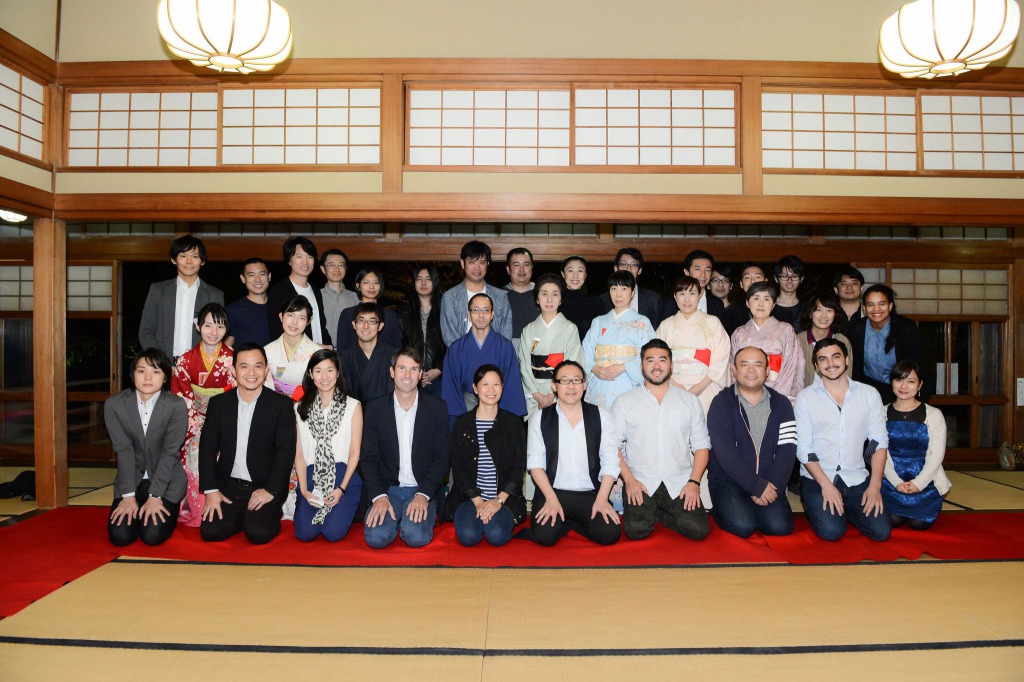 Photo by Daichi Chohara
To close the program, we booked out a historical Japanese garden in Fukuoka called Yusentei Park and held a tea ceremony with the overseas VCs and startups.
Since they had come all the way to Japan, we wanted them to also experience some Japanese culture — and, frankly, to leave wanting to come back. (After this we also went to eat Hakata ramen and motsunabe, lol.)
They normally don’t accept private bookings during the fall foliage season, but they kindly agreed since Myojo Waraku is a project supported by Fukuoka City.
It’s a beautiful and atmospheric garden — please drop by if you’re ever in Fukuoka.
To Grow the Number of Japanese Startups That Succeed Globally
Growing the number of Japanese startups that succeed globally is, I believe, the most important challenge in evolving the Japanese startup ecosystem.
So how do we grow that number?
What matters is the “quality” of startups and the “ability to communicate that quality to the world.”
Quality is the bare minimum prerequisite for winning globally — meaning the team and product must be able to compete on the world stage.
On top of that, the ability to broadcast outward is non-negotiable. No matter how good the product, if it isn’t communicated, it might as well not exist.
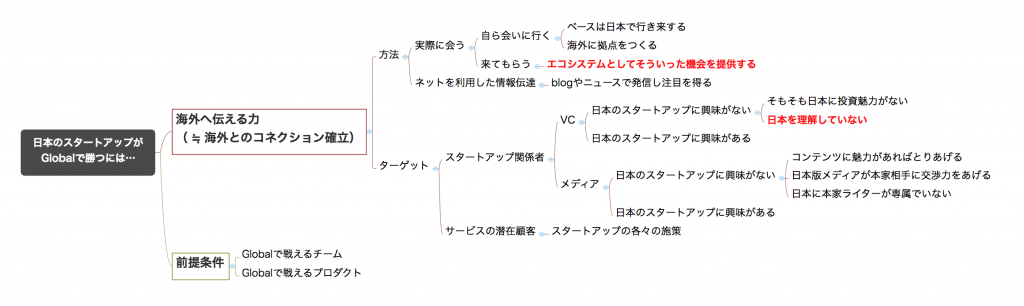
As shown above, the key targets for outbound communication are potential customers of the service and VCs/media (i.e., startup community insiders).
I’ll skip over outreach to potential customers — that’s something each startup does on its own. What we ecosystem supporters really need to think about is communicating with overseas startup community insiders.
There are two ways to reach them: online communication and meeting in person.
For the online piece, media and startups each broadcast on their own.
If you publish in Japanese, it almost never gets translated into English — so you have to publish in English from the start.
Japanese media will be increasingly judged on its English-language reach too.
As for meeting in person, the usual playbook is for the startup to go meet the investor.
Globally-recognized VCs and media outlets get tons of inbound info, so the message basically becomes: “You come to us.”
It’s totally reasonable for startups to approach overseas players individually.
On top of that, what we as ecosystem supporters need to do is create mechanisms that make people, money, and information flow more freely between the Japanese ecosystem and overseas ecosystems.
How Do Overseas VCs See Japanese Startups?
While top-tier VCs centered in Silicon Valley keep pouring more money into Southeast Asia, China, and Israel, why doesn’t that money flow into the Japanese ecosystem?
I asked a few overseas VCs about it while preparing this project, and the logic behind why Japanese startups get deprioritized went something like this:
Japan is physically and linguistically distant, so info is scarce.
→ There's still lots of room to develop in the US market, so when we do look outside the US, we prioritize markets with growth potential like China, India, and Southeast Asia.
→ Compared to those, Japan looks less attractive (the market is shrinking) and info costs are high.
→ So Japan gets deprioritized.
→ Result: we don't really understand Japanese startups.
The upside in the Japanese market isn’t compelling for them.
And if there are technically excellent startups there, well — “you come to us.”
A perfectly logical outcome.
The Japanese Ecosystem Needs to Globalize
But just having startups build globally competitive products and go pitch them in person should really be a baseline — it’s not enough on its own.
We also need to change the soil and push from the industry as a whole.
What we supporters need to do is globalize the Japanese ecosystem.
To that end, we want to bring overseas capital into the Japanese ecosystem.
For example, when overseas startup folks start paying attention to Japanese startups, cross-border M&A also goes up.
The major cross-border M&A deals of recent years are Zynga’s acquisition of Unoh, Google’s acquisition of UTokyo-born SCHAFT, and The Match Group’s acquisition of eureka (operator of Pairs). Not many, in other words.
Growing that count would be a clear KPI for the globalization of the ecosystem.
None of us think we’re closing off the country.
But the result is effectively a closed-off, Galápagos-like ecosystem at the far east of the world.
Meanwhile, the Asian ecosystem centered around Southeast Asia is well linked to the broader Western ecosystem.
Their markets have upside, so overseas capital keeps flowing in.
On top of that, they do publish in English — and their startup events, for example, run primarily in English.
Maybe we need a shift where it becomes normal for the startup world in Japan to default to English as well.
SLUSH ASIA — which Mistletoe also supports — was held entirely in English in spring 2015. There were many overseas participants, and it stood out from the typical Japanese startup-scene events.
SLUSH ASIA 2016 will probably be announced soon — definitely something to watch.
What’s being asked of us in the Japanese startup ecosystem is to keep publishing actively in English and to forcefully invite overseas VCs and media so they get interested in the Japanese market.
Finally…
Timing matters on both sides, so a fundraise doesn’t happen from a single meeting.
But if these matches lead to actual funding, or if — looking back later — these encounters turn out to have helped these startups go global, we’ll be really happy.
There’s still plenty of hypotheses to test, but we’ll keep actively engineering ways to bring people and money from the overseas startup ecosystem into the Japanese ecosystem.